Mastering KDP Dot Grid Interiors: A Complete Guide to 6x9 No-Bleed Journals
The self-publishing landscape has evolved significantly over the last decade, moving beyond traditional text-heavy manuscripts to embrace the lucrative world of low and no-content books. Among the various formats available to creators, dot grid journals have emerged as a staple product for Amazon KDP businesses. Specifically, utilizing pre-formatted interiors like KDP Dot Grid Paper 19 offers a streamlined path to publishing high-quality notebooks without the steep learning curve of graphic design. Understanding the technical specifications and market relevance of these 6x9 no-bleed interiors is essential for both novice publishers and seasoned entrepreneurs looking to scale their catalog efficiently.
The Rise of Functional Minimalism in Publishing
To understand why a simple dot grid journal remains a bestseller, one must first understand the shift in consumer behavior regarding analog tools. In an increasingly digital world, there is a counter-movement toward tactile organization methods such as bullet journaling, sketch noting, and mindful planning. The dot grid serves as the perfect middle ground between the rigidity of lined paper and the chaos of blank pages. It provides structure for handwriting and geometry while remaining unobtrusive enough for creative freedom.
For KDP creators, this enduring demand makes dot grid interiors a "evergreen" niche. Unlike trend-based journals that may fade after a season, functional stationery maintains consistent search volume. However, success in this space relies heavily on quality and usability. This is where specific interior templates like the 19-dot grid configuration come into play. These are not merely random patterns; they are engineered layouts designed to maximize the printable area of a standard trim size while adhering to Amazon’s strict printing guidelines.
Technical Specifications: Why 6x9 and No Bleed Matter
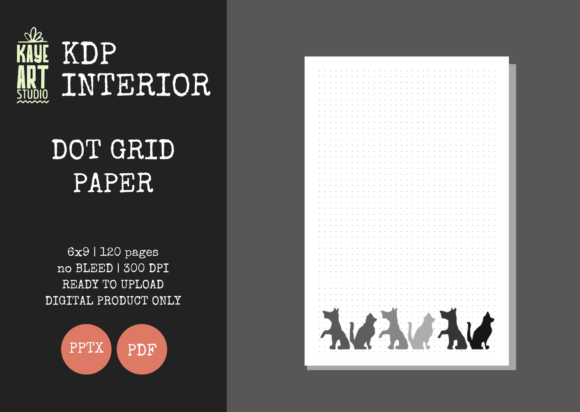
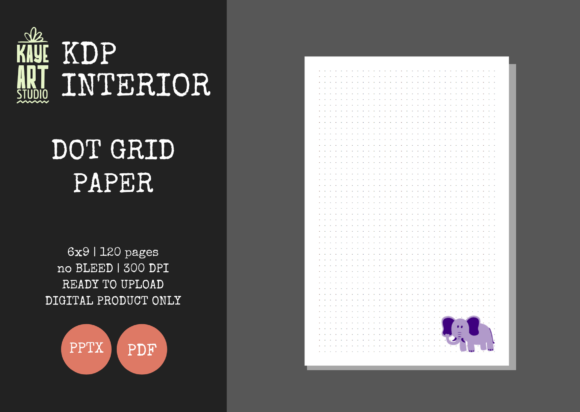
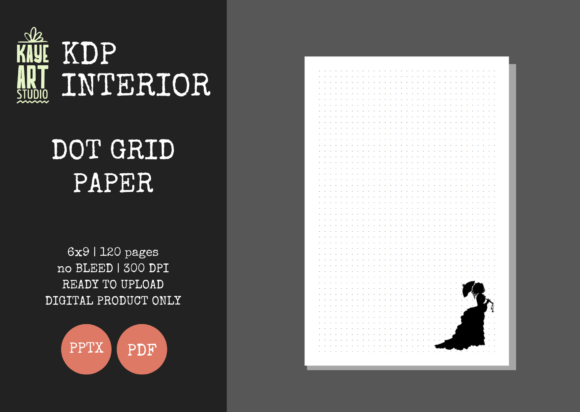
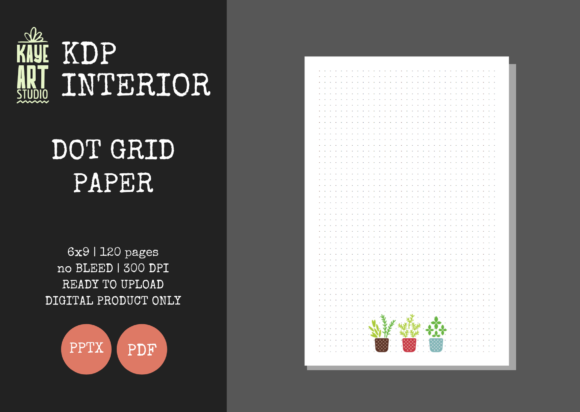
When selecting an interior file for your KDP business, technical precision is non-negotiable. The KDP Dot Grid Paper 19 interior is optimized for the 6x9 inch trim size, which is arguably the most versatile format in the industry. This size mimics standard trade paperbacks and personal organizers, making it familiar and portable for end-users. It fits comfortably in bags, backpacks, and desk drawers, striking a balance between writing surface area and portability.
Understanding No Bleed Settings
A critical feature of this specific interior is the NO BLEED setting. For beginners, "bleed" refers to printing that extends to the very edge of the page, requiring the printer to trim off excess ink. While bleed allows for full-page graphics, it introduces complexity and potential formatting errors. A no-bleed interior keeps all content within a safe margin zone. This ensures that the dot grid pattern remains perfectly centered and consistent across all 120 pages, regardless of minor mechanical variances during the printing process.
Choosing a no-bleed template offers several strategic advantages:
- Reduced Rejection Risk: Files with bleed settings often trigger automated KDP warnings if margins are off by even a fraction of a millimeter. No-bleed files are inherently safer.
- Faster Approval: Simpler file structures typically process faster through Amazon’s review system.
- Cleaner Aesthetics: For minimalist journals, a uniform margin creates a professional, bookstore-quality appearance that customers appreciate.
File Formats and Workflow Efficiency
Efficiency is the currency of a successful low-content publishing business. Creating a 120-page dot grid manuscript from scratch can take hours of alignment work in design software. Pre-made interiors solve this bottleneck by providing ready-to-upload assets. The inclusion of both PDF and PPTX (PowerPoint) file types addresses different workflow needs.
The PDF file is the gold standard for upload. At 300 DPI, it ensures crisp, dark dots that print clearly without appearing pixelated or gray. High resolution is vital because low-quality interiors lead to negative reviews, which can permanently damage a listing’s ranking. Conversely, the editable PowerPoint file serves as a flexible master copy. Experienced publishers use this file to add value-added content, such as introductory pages, habit trackers, or custom branding elements, before exporting a new PDF. This hybrid approach allows you to leverage the speed of a template while maintaining the uniqueness required to stand out in a competitive marketplace.
Clarifying Common Misunderstandings About Low Content
Despite the accessibility of tools like KDP Dot Grid Paper 19, many aspiring publishers harbor misconceptions about what constitutes a viable product. A frequent error is assuming that the interior alone sells the book. It is crucial to note that this listing is for INTERIOR only. You must create your own cover.
The cover is the primary marketing asset. While the interior determines customer satisfaction and retention, the cover drives the click. A common pitfall is pairing a high-quality, professional interior with a generic or poorly designed cover. To succeed, treat the interior as the foundation of a house and the cover as the curb appeal. Both must be excellent. Furthermore, some creators mistakenly believe that "no content" means "no effort." Successful publishers research keywords, analyze competitor gaps, and write compelling descriptions. The interior template saves production time so you can invest more energy in marketing and metadata optimization.
Practical Applications and Target Audiences
Understanding who uses these journals helps in crafting better listings and covers. The 6x9 dot grid format appeals to diverse demographics, each with distinct needs:
- Students and Academics: Used for lecture notes, mind mapping, and diagramming. The dot grid supports both linear writing and spatial organization.
- Designers and Architects: Ideal for quick sketches, wireframing, and prototyping ideas before moving to digital tools.
- Bullet Journalists: The core demographic for dot grids. They utilize the dots for creating custom calendars, trackers, and collections.
- Professionals: Used for meeting notes and project planning. A clean, minimalist interior conveys professionalism in corporate settings.
By recognizing these use cases, you can tailor your book’s title, subtitle, and backend keywords to match specific search intents. Instead of a generic "Dot Grid Notebook," you might position the same interior as "Engineering Sketch Pad" or "Student Study Journal," effectively targeting different niches with the same core asset.
Ensuring Quality and Compliance
Reliability is paramount when using third-party or pre-made interiors. The assurance that files have been tested on KDP provides peace of mind, but it is still best practice to verify your files before publishing. Always download the KDP Previewer tool to check for margin issues, blurry elements, or unexpected blank pages. Even with a tested template, changes made during the editing process (if using the PPTX file) can introduce errors.
Additionally, consider the paper color. Most dot grid interiors are designed for white paper. If you intend to publish on cream paper, ensure the contrast of the dots is sufficient. Dark gray or black dots generally work well on both, but light gray dots may disappear on cream stock. Since this specific interior is standardized at 300 DPI for white paper applications, sticking to white paper is usually the safest route for optimal visual results.
Building a Sustainable KDP Business
Ultimately, products like KDP Dot Grid Paper 19 are tools for scalability. They remove the technical friction of book formatting, allowing publishers to focus on business strategy. However, sustainability comes from differentiation. As you grow, consider how to make your version of the dot grid journal unique. Perhaps you add a specialized index page at the front, include a ruler guide on the back cover, or bundle the interior with a niche-specific cover design.
The low-content model is not a get-rich-quick scheme; it is a volume and quality game. By utilizing high-standard, pre-tested interiors, you ensure that every book you publish meets professional benchmarks. This builds trust with Amazon’s algorithm and, more importantly, with your readers. Whether you are launching your first journal or expanding an existing portfolio, mastering the nuances of trim sizes, bleed settings, and file formats lays the groundwork for long-term passive income in the digital publishing ecosystem.