Evaluating the Male Fashion Sketchbook KDP Interior for Professional Publishing
For independent publishers and fashion educators, sourcing high-quality interiors for low-content books remains a significant logistical challenge. The market is saturated with generic templates, but niche-specific resources like the Male Fashion Sketchbook KDP interior offer a targeted solution for creators focusing on menswear design. This resource is not merely a collection of blank pages; it is a structured technical asset designed to streamline the production of professional-grade sketchbooks. Understanding the practical utility of this specific interior requires looking beyond the surface-level description and analyzing how its file formats, page count, and customization options translate into real-world publishing workflows.
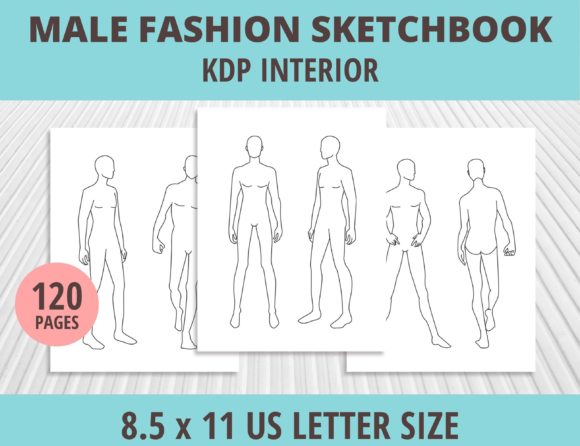
The Male Fashion Sketchbook KDP package distinguishes itself through versatility in file delivery. Rather than providing a static PDF that locks users into a single specification, this resource includes an editable PowerPoint source file, a high-resolution JPG master, and a pre-formatted 120-page PDF at 8.5 x 11 inches. This multi-format approach addresses the primary pain point for KDP creators: the need for adaptability across different trim sizes and branding requirements. For professionals aged 20 to 50 who are managing multiple product lines or creating custom resources for students, this flexibility is often more valuable than the template content itself.
Technical Specifications and File Utility
The inclusion of an editable PowerPoint source file is arguably the most critical component of this package for serious publishers. While many KDP interiors are sold as flattened PDFs, the PPTX format allows for granular control over the layout. Users can adjust margins to accommodate varying gutter sizes, modify header and footer placements, or alter the opacity of the figure croquis to suit different printing standards. This capability is essential when resizing the 8.5 x 11-inch base template to other popular trim sizes such as 8 x 10 or 6 x 9 inches without losing image fidelity or structural integrity.
The 120-page count strikes a functional balance for Amazon KDP specifications. Books in this range are thick enough to be perceived as substantial reference tools or workbooks, yet they remain within cost-effective printing tiers for black and white standard ink. The pre-formatted PDF serves as a rapid deployment option for creators who do not require modifications and wish to publish immediately at the standard letter size. Meanwhile, the high-quality JPG file provides a backup asset for cover design mockups, marketing materials, or digital portfolio presentations, ensuring visual consistency across physical and digital touchpoints.
Assessing Design Quality and Niche Relevance
In the realm of fashion illustration, accuracy matters. Generic sketchbooks often feature female croquis or unisex figures that lack the specific anatomical proportions required for menswear. The Male Fashion Sketchbook KDP interior addresses this gap by providing templates tailored specifically to male silhouettes. This specificity is vital for fashion design students, tailors, and apparel entrepreneurs who need accurate guides for draping, pattern making, and technical flats. Using incorrect proportions can lead to fundamental design errors, making niche-accurate interiors a necessary investment rather than a luxury.
The line weight and contrast of the sketches are optimized for print reproduction. A common failure point in low-content book creation is templates that appear too dark when printed via KDP’s standard offset process, obscuring the user's own pencil or ink work. This interior appears calibrated to maintain visibility as a guide while remaining subtle enough to serve as a background. This technical consideration suggests the creator understands the limitations and characteristics of print-on-demand technology, which adds a layer of reliability for buyers who have previously been burned by poorly digitized assets.
Strategic Applications for Publishers and Educators
For freelance designers and small business owners, this sketchbook interior functions as a scalable product asset. It can be used as-is to create a standalone male fashion sketchbook, or it can be combined with other KDP interiors to build comprehensive design portfolios. For example, a publisher might integrate these male figure templates with sections dedicated to fabric swatches, color theory charts, or measurement tables to create a unique, high-value hybrid book. This modularity supports a diversified publishing strategy where one core asset generates multiple distinct SKUs.
Educators and workshop facilitators represent another key demographic for this resource. Creating custom course materials from scratch is time-prohibitive. By utilizing this pre-made interior, instructors can rapidly produce branded workbooks for menswear design courses, sewing workshops, or fashion illustration seminars. The ability to edit the PowerPoint file means educators can add their logo, course title, or specific instructional notes directly onto the template pages before printing or uploading. This transforms a generic commodity into a proprietary educational tool, enhancing the perceived value of their curriculum without requiring advanced graphic design skills.
Workflow Integration and Customization Limits
While the Male Fashion Sketchbook KDP interior offers significant advantages, prospective users must approach it with realistic expectations regarding workflow integration. The PowerPoint file requires a working knowledge of slide master editing to make global changes efficiently. Users unfamiliar with PPTX layout mechanics may find themselves adjusting elements slide-by-slide, which negates the time-saving benefits. Professionals should allocate time to test the file structure upon purchase to ensure it aligns with their existing software ecosystem and skill set.
Furthermore, while the files are resizable, changing aspect ratios significantly (e.g., from 8.5x11 to a square format) may require repositioning individual elements to maintain proper margins and safe zones. KDP’s printing tolerances are strict, and automated resizing does not always account for bleed requirements or binding shifts. Experienced publishers will recognize this as standard procedure, but beginners should be prepared to perform manual quality checks after any dimensional adjustments. The tool facilitates customization, but it does not automate the responsibility of pre-press verification.
Evaluating Long-Term Value and Market Fit
From an ROI perspective, this interior supports both active income generation through book sales and passive brand building through lead magnets. Menswear design is a less saturated niche compared to womenswear fashion journals, offering better organic search visibility for new publications. By leveraging a specialized interior, publishers can target long-tail keywords related to male fashion illustration, technical drawing, and menswear portfolio preparation. The specificity of the content helps signal relevance to Amazon’s algorithm and to human shoppers seeking precise tools.
The long-term value extends beyond direct sales. For marketers and bloggers in the fashion space, offering a branded version of this sketchbook as a free download can be an effective list-building strategy. The professional quality of the interior reflects positively on the provider’s brand authority. Unlike hastily assembled freebies, a well-structured sketchbook demonstrates expertise and provides genuine utility, fostering trust with potential clients or students. This dual-purpose utility—as both a commercial product and a marketing asset—enhances the overall return on investment for creative entrepreneurs.
Practical Recommendations for Implementation
To maximize the effectiveness of the Male Fashion Sketchbook KDP interior, users should prioritize differentiation. Since other publishers may have access to the same base files, success depends on added value. Consider combining this interior with original introductory content, such as tutorials on rendering male fabrics, guides to menswear terminology, or interviews with industry professionals. These textual additions transform a standard template book into a unique educational resource that cannot be easily replicated by competitors using the same source files.
Quality assurance should be rigorous. Before launching, order a physical proof copy to verify that the line weights print clearly and that the margins accommodate the binding correctly. Test the paper quality with various media—pencil, marker, fine liner—to ensure the template serves its intended function for end-users. Documenting these tests can also provide content for product listings, reassuring potential buyers that the book has been vetted for practical use. Transparency about the product’s capabilities builds credibility and reduces return rates.
Ultimately, the Male Fashion Sketchbook KDP interior is a functional production asset best suited for users who understand the mechanics of KDP publishing and value efficiency over novelty. It solves specific problems related to menswear template scarcity and file rigidity. For professionals willing to invest the time in customization and quality control, it offers a reliable foundation for building a specialized catalog. However, those seeking a completely finished, zero-effort product may find the requirement for editing and verification demanding. Success with this resource correlates directly with the user’s willingness to treat it as a raw material rather than a final destination.