Streamlining Production with KDP Lined Journal 35: A Technical Guide to 6x9 Bleed Interiors
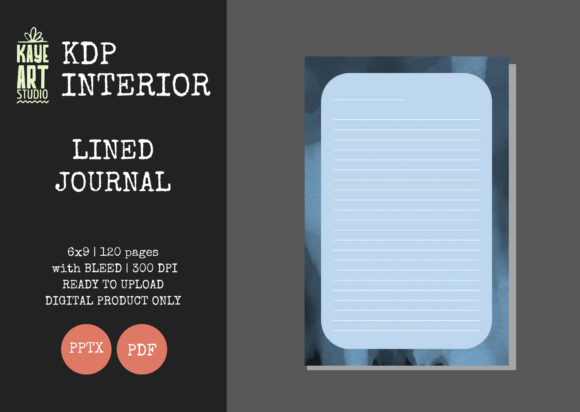
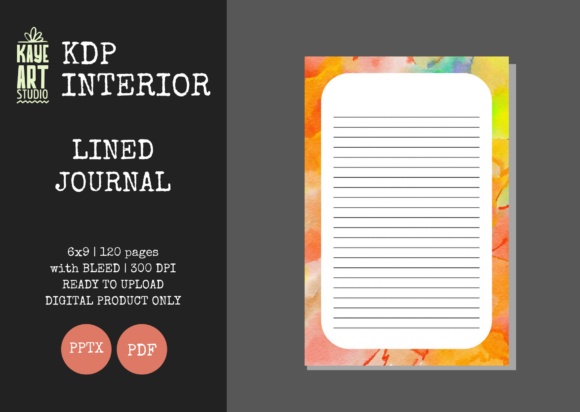
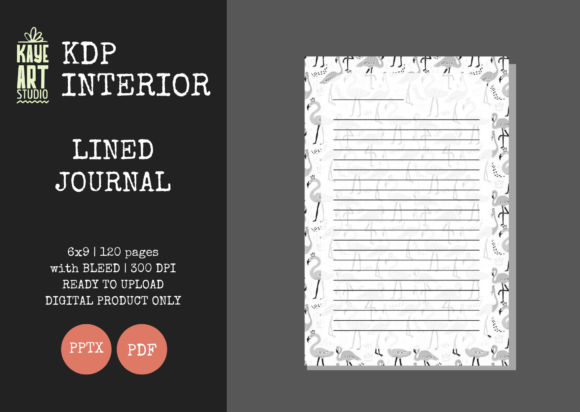
Success in the low-content publishing sector often hinges on the efficiency of your production workflow and the technical precision of your files. For publishers managing extensive catalogs or those just beginning their journey into Amazon KDP, utilizing standardized, pre-formatted interiors is a strategic move that reduces errors and accelerates time-to-market. The KDP Lined Journal 35 serves as a foundational asset in this ecosystem, offering a specific configuration designed to meet platform requirements while providing ample creative freedom for cover design. Understanding the technical nuances of this 6x9 inch, 120-page bleed interior allows creators to focus on niche research and marketing rather than repetitive formatting tasks.
Technical Specifications and Platform Compliance
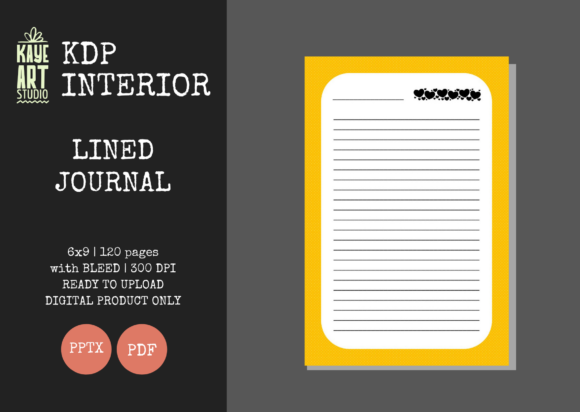
The primary value of a pre-made interior like KDP Lined Journal 35 lies in its adherence to strict printing specifications. Amazon’s print-on-demand infrastructure requires exact margins, gutter allowances, and resolution standards. This specific template is engineered at 300 DPI, which is the industry standard for crisp, professional-grade printing. While some creators attempt to use lower-resolution files to save storage space, 300 DPI ensures that line work remains sharp and ink does not bleed or appear pixelated on the physical page.
A critical distinction for this file is the bleed setting. When utilizing KDP Lined Journal 35, the trim size is 6x9 inches, but the actual PDF canvas extends beyond these dimensions. This extra margin accounts for slight mechanical shifts during the trimming process at the fulfillment center. Publishers must understand that "bleed" is not merely a checkbox; it is a physical attribute of the file. If you upload this interior, you are contractually and technically required to select the "Bleed" option during the KDP upload wizard. Failing to match the file type with the metadata selection results in rejected uploads or, worse, approved books with cropped content or unintended white borders.
The page count is fixed at 120 pages. This volume strikes a balance between perceived value and printing costs. In the 6x9 category, 120 pages provides sufficient space for meaningful journaling without pushing the spine width into a range that might complicate cover design calculations for beginners. Furthermore, because this listing is for the interior only, it decouples the content from the aesthetic branding, allowing the same high-quality internal structure to be repurposed across dozens of different niches simply by changing the external cover art.
Leveraging Editable PPTX Files for Customization
While the PDF version of KDP Interiors Lined Journal is ready for immediate upload, the inclusion of an editable PowerPoint (PPTX) file transforms this product from a static template into a dynamic design tool. Many publishers overlook the utility of the source file, assuming they must stick to the default layout. However, the PPTX format offers significant advantages for those looking to differentiate their products in a saturated marketplace.
- Line Spacing Adjustments: Different demographics prefer different ruling widths. College-ruled lines appeal to students and professionals with smaller handwriting, while wide-ruled lines serve younger users or those with motor control considerations. The editable file allows you to adjust line spacing globally across all 120 pages in minutes.
- Header and Footer Integration: Adding a subtle motivational quote, a date field, or a branding element to the top or bottom of each page can increase the perceived value of the journal. Because the master slides in PowerPoint control global elements, you can add these features once and have them propagate throughout the entire document.
- Niche-Specific Modifications: A generic lined journal competes with millions of others. By editing the PPTX, you can add specialized sections such as "Weekly Goals," "Gratitude Prompts," or "Project Notes" to the first few pages, effectively pivoting a standard KDP Lined Journal 35 into a targeted planner or workbook without redesigning from scratch.
This editability supports the E-E-A-T principle (Experience, Expertise, Authoritativeness, and Trustworthiness) by enabling publishers to create genuinely helpful resources tailored to specific user needs, rather than flooding the market with identical generic commodities.
Strategic Applications Across Diverse Niches
The versatility of a simple lined journal format makes it applicable to a broad spectrum of audiences. Professionals, educators, researchers, and hobbyists all utilize physical notebooks, yet their specific requirements vary. Understanding how to position KDP Lined Journal 35 for these distinct groups maximizes its commercial potential.
Educational and Academic Use Cases
For students and educators, the 6x9 trim size is ideal for portability. It fits easily into backpacks and desk organizers alongside standard textbooks. When targeting this demographic, the 120-page count aligns well with semester-based note-taking or subject-specific journals. Publishers can utilize the editable PPTX to create composition notebook styles, Cornell note-taking layouts, or lab journals. The key here is functionality; the interior must support active learning and information retention.
Professional and Business Documentation
In corporate and entrepreneurial settings, lined journals serve as meeting logs, project trackers, and idea capture devices. The clean, minimalist aesthetic of KDP Interiors Lined Journal appeals to professionals who prefer distraction-free writing surfaces. Business owners often purchase these in bulk or seek out specific designs that reflect their industry. By maintaining a professional interior standard through high-DPI files, publishers ensure the final product feels substantial and appropriate for boardroom environments.
Creative Writing and Personal Reflection
Hobbyists, poets, and individuals practicing mindfulness represent a massive consumer base for low-content books. For this audience, the tactile experience of writing is paramount. The 300 DPI quality ensures that the lines are visible but not intrusive, allowing the writer's words to take center stage. Creators targeting this niche often pair the KDP Lined Journal 35 interior with covers featuring artistic illustrations, nature photography, or typographic designs that evoke emotion. The separation of interior and cover allows for rapid testing of different aesthetic trends without altering the proven internal structure.
Workflow Integration and Quality Assurance
Incorporating pre-made interiors into a publishing business requires a disciplined approach to quality assurance. Even though files like KDP Lined Journal 35 are tested for KDP compatibility, human error during the upload or modification process can introduce defects. Establishing a verification checklist is essential for maintaining account health and customer satisfaction.
- File Verification: Before uploading, always open the PDF in a dedicated viewer (not a browser) to check for rendering issues. Zoom in to 100% to verify line sharpness and ensure no artifacts exist near the bleed edges.
- Cover Calculation Alignment: Since this interior includes bleed, your cover file must also include bleed. Use the KDP Cover Calculator specifically for a 6x9, 120-page book with bleed selected. Mismatched bleed settings between interior and cover are the most common cause of rejection.
- Metadata Consistency: Ensure your title, subtitle, and backend keywords accurately reflect the interior's utility. If you modified the PPTX to create a specific type of journal, your metadata must describe that modification. Misleading customers by listing a specialized journal but delivering a generic one leads to negative reviews.
- Proof Copy Review: For new variations created using the editable PPTX, ordering a proof copy is non-negotiable. Digital screens cannot replicate the feel of paper weight, line darkness, or gutter margins. Physical validation confirms that your digital edits translated correctly to print.
Maximizing Asset Longevity and Value
Treating KDP Lined Journal 35 as a long-term business asset rather than a disposable template changes how you approach product development. The included PPTX file should be archived and version-controlled. As you gather data on what sells, you can return to the master file to create improved iterations. Perhaps you discover that adding page numbers increases sales in the productivity niche, or that removing header lines improves the user experience for left-handed writers. These insights compound over time when you have full control over the source file.
Furthermore, this interior serves as an excellent baseline for A/B testing. Because the internal experience remains constant, any variance in sales performance can be attributed directly to cover design, keyword strategy, or pricing. This isolation of variables is difficult to achieve when every book has a unique interior. By standardizing on reliable assets like KDP Interiors Lined Journal, publishers gain clearer data signals and can make more informed decisions about catalog expansion.
Ultimately, the goal of using pre-formatted interiors is to remove technical friction so that creativity and strategy can flourish. Whether serving a researcher needing a durable field notebook or a consumer seeking a daily gratitude practice, the foundation of a successful product is a flawless interior. KDP Lined Journal 35 provides that foundation, combining technical compliance with the flexibility needed to serve a diverse and evolving marketplace. By mastering both the ready-to-upload PDF and the customizable PPTX, publishers can build a sustainable, scalable business that delivers genuine value to end-users.