Alphabetical Address Book: A Versatile KDP Interior
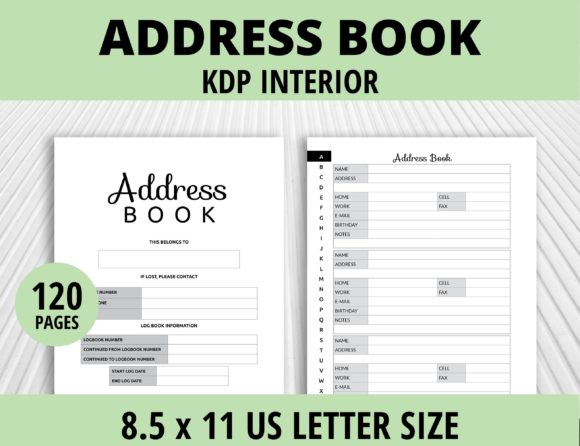
In an era dominated by digital contact management, the tangible reliability of a physical directory remains surprisingly relevant. For self-publishers, low-content book creators, and stationery designers, finding a high-quality, flexible template is often the bottleneck in production. This Alphabetical Address Book interior solves that specific friction point. It is not merely a static PDF; it is a comprehensive design asset package that includes an editable EPS source file, a high-resolution JPG, and a print-ready 120-page PDF formatted at 8.5 x 11 inches. This combination transforms a simple organizational tool into a scalable product line or a bespoke personal utility.
Beyond Basic Organization: Why Physical Directories Persist
While smartphones store thousands of numbers, they lack the tactile reinforcement of memory and the permanence of ink. An Alphabetical Address Book serves as a dedicated, distraction-free repository for critical connections. For professionals and creatives, this distinction matters. When you are networking at a conference or brainstorming with a client, pulling out a phone invites notifications and multitasking. Opening a physical book signals focus and intentionality.
From a publishing perspective, this persistence translates to market demand. Niche audiences—from genealogy researchers to real estate agents—consistently seek specialized physical organizers. They want layouts that accommodate specific data points beyond just email and phone numbers, such as birthdays, anniversaries, social media handles, or business notes. Having an editable source file allows you to tailor the interior to these micro-niches rather than relying on generic templates that fail to address specific user needs.
The Strategic Value of Editable Source Files
The inclusion of an editable EPS file is the defining feature of this asset. Most KDP interiors are sold as flattened PDFs, locking you into a single layout and font choice. With vector-based source files, you gain complete creative control. You can adjust column widths to allow more space for lengthy addresses or international formatting. You might change the typography to match a vintage aesthetic for a heritage journal or adopt a clean sans-serif for a corporate networking log.
This editability also future-proofs your purchase. If Amazon KDP changes margin requirements or bleed specifications next year, you can adjust the master file instantly without redrawing the entire layout from scratch. For entrepreneurs building a brand around stationery or planners, this means maintaining visual consistency across multiple products while significantly reducing development time.
Practical Applications Across Diverse Environments
The versatility of this 120-page layout extends far beyond a standard home phone book. Understanding these varied applications helps in both utilizing the file effectively and marketing the final product to the right audience.
- Professional Networking: Real estate agents, insurance brokers, and sales professionals often maintain "shadow" contact lists separate from their CRM. These books capture context—where we met, spouse’s name, personal interests—that digital fields often bury. The alphabetical tab system facilitates quick retrieval during follow-up calls.
- Educational Administration: Teachers and homeschool educators use address books for emergency contacts, parent communication logs, and student resource directories. The 8.5 x 11 size provides ample writing space for detailed notes regarding allergies, custody arrangements, or learning preferences that require immediate, offline access.
- Creative Project Management: Event planners, photographers, and filmmakers manage extensive vendor lists. A physical directory organized alphabetically by service type (e.g., Catering, Lighting, Venues) acts as a reliable backup when venue Wi-Fi fails or batteries die during critical shoot days.
- Genealogy and Family History: Researchers tracking extended family trees need structured spaces for birth dates, relationships, and locations. The spacious layout accommodates the complex naming conventions and multi-generational data typical in family history projects.
- Small Business Operations: Freelancers and solopreneurs often use these books as client intake logs or supplier directories. Writing information down manually has been shown to improve retention and relationship building compared to typing data into a form.
Technical Specifications and Production Readiness
Quality in low-content publishing is non-negotiable. Blurry lines, inconsistent margins, or poor contrast result in negative reviews and returns. This Alphabetical Address Book package addresses technical rigor through its multi-format delivery.
The PDF File is pre-formatted at 8.5 x 11 inches with 120 pages, optimized for standard US Letter printing. This size offers approximately 30% more writing surface than the common 6x9 format, making it ideal for users who need room for detailed annotations. The page count strikes a balance between substantial utility and cost-effective printing, keeping royalty margins healthy for publishers.
The High-Quality JPG serves multiple purposes. It functions as a proofing reference to verify layout integrity before uploading to KDP. It also works as marketing material for Etsy listings, Gumroad stores, or social media promotion, allowing potential buyers to see exactly what the interior looks like without needing to download a large PDF.
Most importantly, the EPS Vector File ensures infinite scalability. Whether you are resizing down to a pocket-sized A6 travel companion or up to a large-format desk reference, the lines remain crisp and the text remains sharp. Vectors eliminate the pixelation issues associated with rasterized images, ensuring professional print quality at any dimension.
Customization Strategies for Market Differentiation
To maximize the return on this asset, avoid publishing the template exactly as-is. The market is saturated with generic address books. Use the editable source file to create distinct variations that serve specific demographics.
- Add Functional Extras: Insert a few pages of lined notes, graph paper for mapping, or conversion charts relevant to your niche. A gardening club address book might include planting zone maps; a tech networking book could include QR code generation guides.
- Modify the Header Structure: Standard address books have Name/Address/Phone. Consider adding fields for "LinkedIn URL," "Referral Source," "Last Contact Date," or "Gift Ideas." These small additions dramatically increase perceived value for targeted users.
- Branding Integration: For businesses using this internally, add company logos, mission statements, or department-specific color coding to the headers. This turns a generic utility into a branded organizational tool that reinforces company culture.
- Accessibility Adjustments: Increase font sizes and line spacing to create senior-friendly or low-vision editions. The vector nature of the EPS file makes global typography changes effortless, opening up an underserved demographic segment.
Evaluating Quality and Usability
When implementing this Alphabetical Address Book, prioritize user experience over aesthetic density. White space is functional; it prevents cramping and improves legibility. Ensure that binding margins are sufficient so that writing near the spine remains comfortable. Test print a sample copy before bulk ordering or publishing to verify that the paper weight supports your intended writing instruments without bleed-through.
For digital sellers offering this as a printable, provide clear instructions on printer settings. Recommend "Actual Size" scaling to preserve margins and suggest double-sided printing configurations if applicable. Good documentation reduces customer support inquiries and enhances the overall perception of professionalism.
Ultimately, this asset represents efficiency. Instead of spending dozens of hours designing grid systems and calculating gutters, you acquire a professionally engineered foundation. This frees up mental bandwidth for marketing, niche research, and creative expansion. Whether used as a personal organizational anchor or as the cornerstone of a publishing portfolio, the flexibility embedded in these files delivers practical, long-term value that transcends the simplicity of the final printed page.